
Our rationale
Not entertainment. Not explanation.
Two short texts: what is different about making theatre for toddlers, and why theatre for the young need not be about entertaining them.
Theatre for toddlers
An experience through the senses
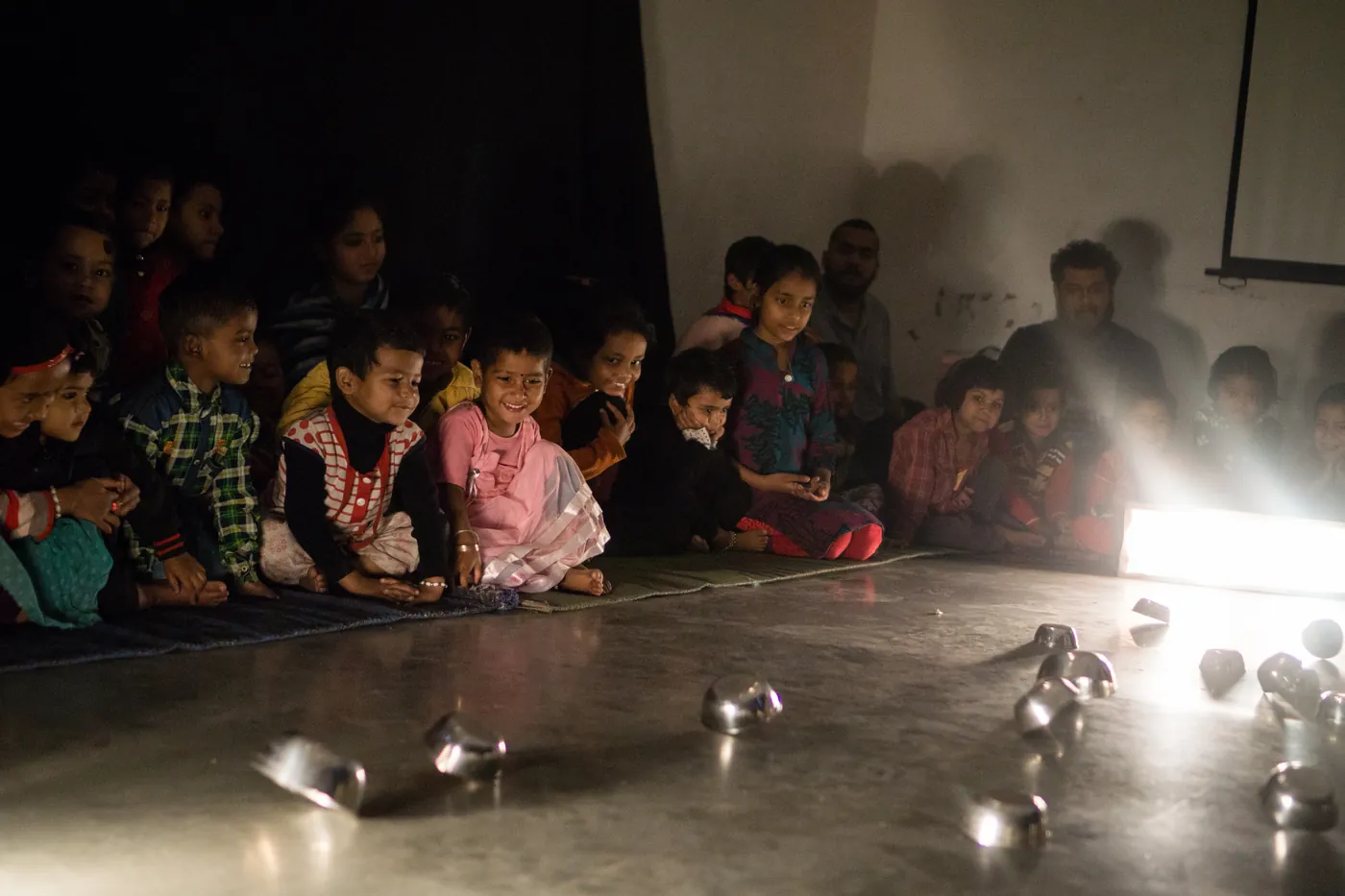
While theatre for toddlers too falls within the bracket of theatre for young people, it is designed specifically to give the toddler an experience of the art through the senses. It works as a medium for these very young children to respond to what they see, hear and touch.
Even though toddlers are simply spectators of a performance, the sensorial experience allows them to absorb what they see and hear in their own way, beyond the limitations of the spoken word.
An awareness of being aware
This performance works at an experiential realm for the child. Theatre, we believe, creates an awareness of being aware — and of what it means to respond to the world through one’s senses.
We as adults conceive through text and language, but the child spontaneously experiences the sound of the language and the visual of the text.
An exposure to the sensorial
This alertness to the senses is predominant at the toddler age, where what their experience becomes depends on what they conceive of the sensorial. Theatre for toddlers is, simply put, an exposure for the very young child to this sensorial experience.
Theatre for children
There is no dearth of entertainment
Theatre for young people or very young children need not be about entertaining them. There is no dearth of entertainment in the lives of young people or adults, and theatre need not be seen as complementing the world of television, cinema, or educational awareness and growth.
A medium worth its name
Theatre enables all this and much more in any case — and hence we need to think of theatre for young people as a medium worth its name, one which works at multiple levels for a child as it does for adults.
It needs to be seen as something which communicates ideas, provoking questions, enabling children to formulate an opinion and an understanding of their own position in the world and of those around them.
Equal partners in a conversation
All of us who profess and practise the making of theatre, whether specifically for children or for adults, must realise that at the end of the day theatre can only work if we take our audiences to be able to question and think through all that we produce for them.
If we think of children as beings who need to be “explained” things, instead of being equal partners in a conversation, then theatre for young people does not work. We might as well be honest that we can make good theatre for children only if we believe in it ourselves.
Patronage has no place in pedagogy
The importance of theatre for young people is to break the shackles of doing fairy tales and stories of kings and queens just as fantasy — because doing that in the name of simplifying is actually patronising a child. And patronage, we believe, has no place in pedagogy, which is essentially the role of theatre for children.